How many of your GenAI assistant’s answers would match your BI dashboards if someone asked both the same question? Wait, you might be interested in yet another question. How much are you paying to keep the two apart?
The quick route to streamlining costs and getting the same responses from your BI dashboard and GenAI is by sorting your data pipeline. If your dashboard counts a customer as active after a purchase within 90 days and the GenAI pipeline uses 30, the same question gets two different answers.
In KPMG’s Global AI Pulse survey of 2,145 senior leaders, 42% of leaders admitted to only having partial visibility into their AI spending and just 7% report established ROI from AI, so every duplicated cost is hard to justify.
That said, the real decision in your data pipeline architecture is where GenAI and BI should split, and why everything before that point needs to be built and governed once.
What goes wrong if GenAI runs on your BI pipeline unchanged
If you keep your GenAI assistant’s data pipelines in your existing BI pipeline without changing anything, two things go wrong
Stale data: BI pipelines usually refresh on a schedule, often overnight, so your assistant may answer from yesterday’s figures.
Unlabelled data: BI data usually lacks the metadata and business definitions a model needs, so the assistant can misread what a field means.
Either way, an assistant would still give you a confident answer, and unlike a failed dashboard refresh, nothing on screen will signal that the answer is wrong. And based on that information, you might end up making a wrong decision.
How to build a data pipeline architecture that serves both traditional BI and GenAI workloads
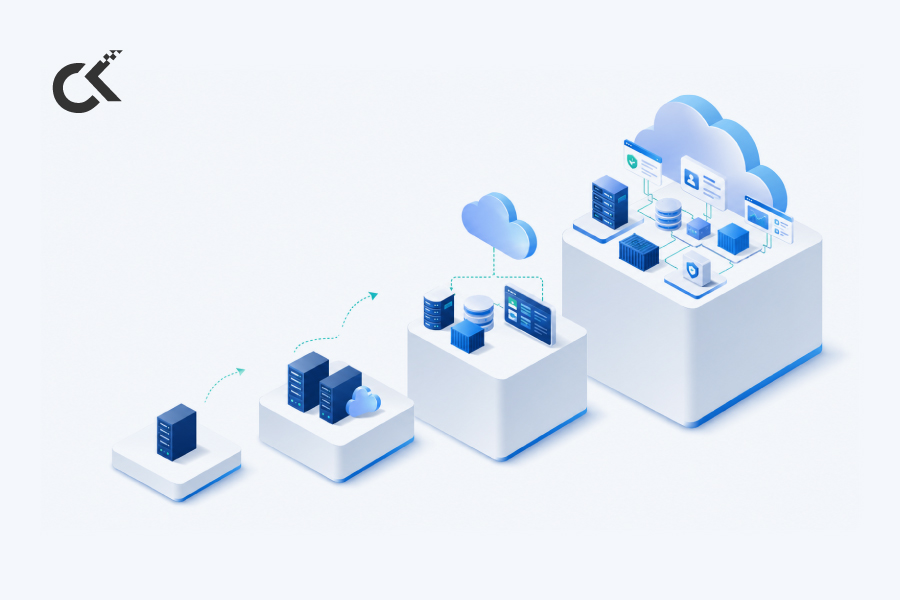
A data pipeline architecture that serves both workloads shares all 5 layers up to governed, modelled data and a semantic layer, which sits at the top of everything and holds the definitions of metrics and entities that every tool reads. The shared layers are:
- Ingestion: Batch loads for systems of record, plus change data capture (CDC) or streaming where freshness matters
- Storage: A lakehouse on open table formats such as Apache Iceberg or Delta Lake, so both workloads can read one copy of the data
- Quality: For data contracts and quality checks at ingestion
- Governance: One catalogue that holds access policies and lineage
- Meaning: One semantic layer that defines each metric and entity once
After that, it splits into two serving paths:
- BI path: data marts and reporting models, feeding dashboards.
- GenAI path: parsing and chunking, embeddings and a permission-aware retrieval index. It feeds the context layer that tells the model what that particular data means.
According to Gartner, you should build the context layer into your core infrastructure because schema-based data models alone may lack the business meaning that agentic AI needs. In fact, it forecasts that organizations prioritizing semantics in AI-ready data will increase agentic AI accuracy by up to 80% and reduce costs by up to 60% by 2027.
Where do BI and GenAI workloads need to part ways
To be precise, at the point where the data gets used. That’s because BI reads modelled, structured tables on a schedule, and GenAI reads documents (structured and unstructured both) and records that have been parsed, chunked, embedded, and filtered by permission, often on a fresher cycle.
Moreover, a BI pipeline ends at a warehouse from which your analysts and business teams pull the data through dashboards. A GenAI pipeline ends at a retrieval index where your AI model runs a query on every request because it can’t stop and ask what a field means or whether the data is current.
So that particular data has to carry that information, metadata, lineage, and business definitions attached, with it all the time. Those needs are where scaling breaks down.
Build once and split only where your workloads differ
This is the model Cloud Kinetics followed for a tax agency in Southeast Asia that was moving off an ageing on-premises platform. Cloud Kinetics built a unified data platform on Azure, hosted in a sovereign cloud, that holds structured, semi-structured and unstructured data for income tax, property tax and stamp duty. Ingestion runs through metadata-driven frameworks on Azure Data Factory. Storage sits in a lakehouse built on Azure Synapse Analytics and Azure Data Lake Storage. Quality checks, data classification and access policies are applied at ingestion and across the pipelines.
That single foundation now feeds both workloads. On the BI side, data marts and role-based dashboards restrict auditors and analysts to the reports their role allows. On the AI side, AI-driven engines calculate income and property tax from the same governed data. The agency migrated its data with accuracy, cut manual workload and reached more than 90% user adoption after training.